
Architectural Photography for Presale Developers: The Complete Guide

What does a developer need from their architectural photographer during presale?
A developer launching a presale needs Riviera Maya architectural photography that does three things at once: show the project as it actually is today (not as the render promises it will be), convey seriousness to a buyer who can't yet walk through their unit, and get delivered on time for launch. That's what photography for real estate presales really means at its core: it isn't documenting a finished building, it's building the visual evidence of a project that's still under construction.
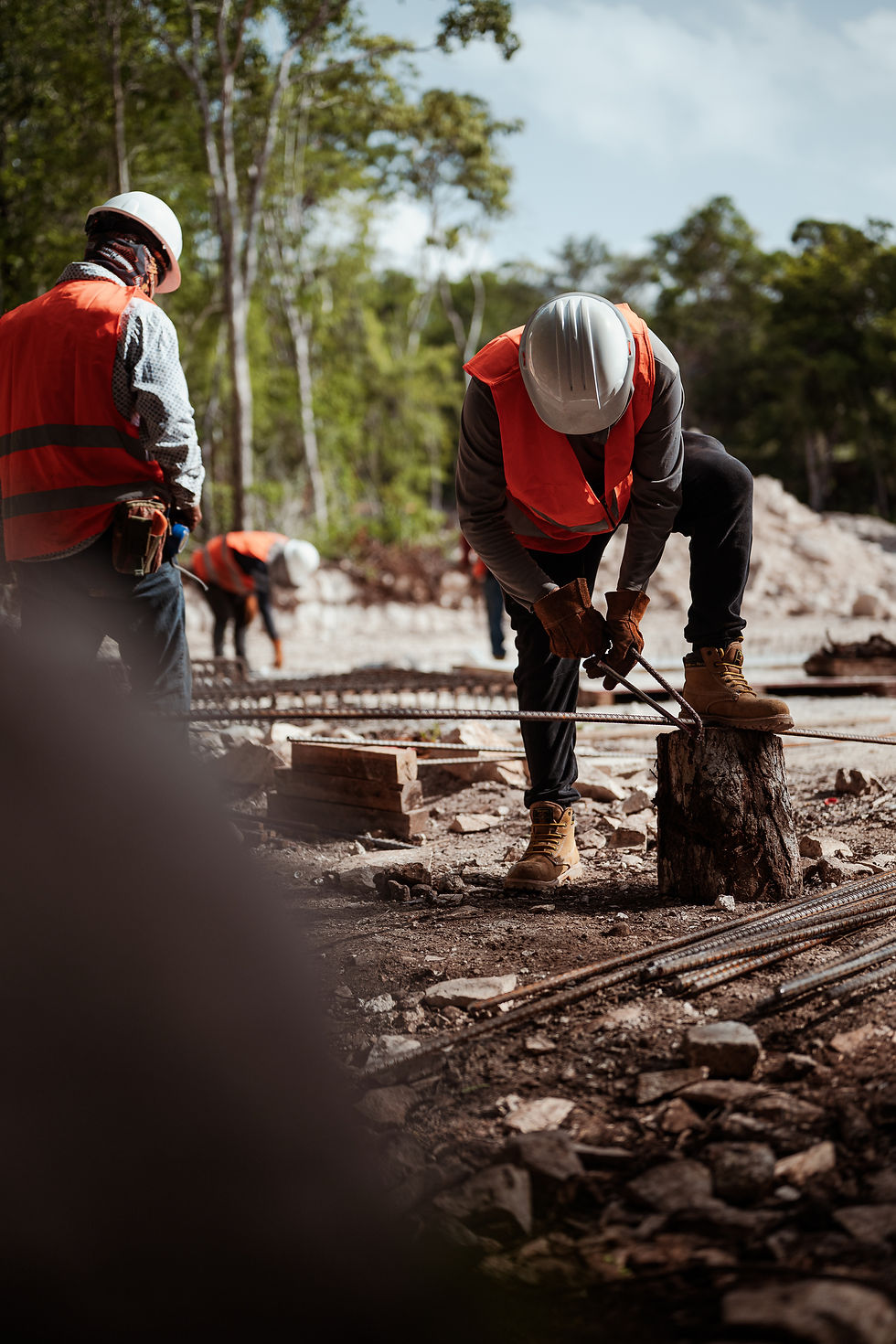
Most of the problems I see between developers and photographers aren't about style. They're about scheduling and about expectations that were never clearly set for what can actually be photographed at the shell-and-core stage. This guide covers the three things that really determine whether your presale photography works: what to shoot at each stage, how to fit production around the launch date, and what the shoot itself should include.
Why presale sales depend on images, not on the finished building
n a presale, the buyer signs on a promise. There's usually no model unit to walk through, no real view from the terrace they can check on their phone. What exists is the land, the construction at its current stage, and the architecture firm's renders. If the developer did it right, there's also serious photography of the progress.
The presale market in the Riviera Maya has matured. A pretty floor plan and a promise of appreciation are no longer enough: today's buyer compares developers, asks about the project's backing, and rightly distrusts material that looks shot on a phone or pulled from a generic stock library. That's not a problem unique to this region, but it weighs more heavily here, since a large number of developments are competing for the same type of buyer, often a foreign one, buying from a distance.
Serious photography doesn't eliminate the buyer's uncertainty. It reduces it. And in presale, reducing uncertainty is most of the sales job.
The project moments that actually need photography

Not every stage of a development needs the same kind of production. These are the moments where photography changes the commercial outcome:
Launch on paper. Land, context, and real views of the surroundings (beach, jungle, lagoon, avenue) that back up the render's promise.
Construction progress. Periodic photography that documents that the project exists and is moving forward, something more and more buyers ask to see before signing the second payment.
Presale with advanced shell-and-core. At this point you can photograph structure, materials, and finishes in progress, and start showing the relationship between design and real space.
Handover and model unit. The moment of heaviest production investment: here the photography has to carry the marketing for the final units and, often, double as a portfolio for the developer's next project.
A common mistake is treating these four moments as if they were a single shoot. They aren't. Each one answers a different question for the buyer, and each one needs its own brief.
Documenting all four stages also leaves something many developers don't ask for but end up appreciating: a record of the construction's progress over time. Once the project is delivered, that archive makes it possible to put together an edit that runs from the original vision all the way to the finished building, not a scattered set of photos from isolated moments.
There's something else in it too. Seeing up close how a building was actually constructed, through the eyes of someone who was present at every stage, adds a kind of craftsmanship value to the finished product that photographing the end result alone can't capture.
Production timeline vs. launch date

This is what causes the most problems in practice: the marketing launch date almost never lines up with the ideal moment to shoot. The sales team wants material two weeks before launch; the photographer needs the right light, construction at a presentable point, and time to edit.
A timeline that generally works:
Four to six weeks before launch: technical site visit, defining what's ready to be photographed and what isn't.
Three weeks before: production (photography, drone, video if applicable).
Two weeks before: delivery of first selects to the sales and marketing team.
One week before: full delivery via online gallery, ready for the campaign.
When the timeline gets compressed because the launch date shifted without notice to the photographer, quality suffers first in the light (shooting whenever is possible instead of at the right hour), then in the edit (delivered fast, not properly reviewed). Giving advance notice isn't a courtesy, it's part of the project's own quality control.
What a real estate architectural photography session for developers should include
What a serious real estate photography session for presale includes, at minimum:
Exterior photography of the site and its immediate context (access, surroundings, views).
Documentation of construction progress at the agreed stage.
Drone for real estate photography: aerial perspectives of the land, its position relative to the beach or area of interest, and a sense of scale that ground-level photography can't achieve.
Institutional or commercial video for web and advertising use, with additional material geared toward social media when the project calls for it.
Delivery organized by use: material for sales, material for press/public relations, material for social media.
Once the architectural side is done, there's a separate moment for adding lifestyle content to the finished building: people enjoying the space, real scenes of use. That isn't part of the architectural photography shoot itself, it's an additional phase that makes more sense later on, once there's a model unit or handover is close.
Interior vs. exterior photography in a presale development
In a pure presale, with no finished unit, most of the weight falls on exteriors: land, context, construction. As the project moves toward handover, interiors take on a bigger role, especially if there's a furnished model unit.
The technical difference matters: interior vs exterior architectural photography isn't just a matter of switching lenses. Exteriors depend on time of day and weather; interiors depend on controlling artificial light, staging the space before shooting, and framing decisions that respect the architecture firm's original intent, not just whatever looks most "sellable" in an isolated photo.
Common mistakes when hiring photography for presale
Mistake | Why it happens | Consequence |
Hiring the same photographer who shoots weddings or restaurants | Lower price, immediate availability | Material that doesn't understand architectural composition or the pace of a presale |
Shooting before construction is at a presentable point | Pressure from the launch date | Material that has to be redone, doubling the cost |
Not planning drone work in advance (permits, weather) | The idea gets added at the last minute | Aerial shots get cancelled or come out poorly |
Mixing architectural photography with lifestyle without defining it | Assuming it's "all the same thing" | An inconsistent set of images |
Specialization matters more than it seems in presale. A photographer who splits their week between weddings, hotels, and restaurants isn't necessarily bad at their job, but they don't live with the specific questions of a presale every day: what to show when nothing is finished yet, how to honestly photograph work in progress without making it look abandoned, how to coordinate with the architecture firm to respect the design intent.
How to choose an architectural photographer for your development
Three questions that actually matter when evaluating vendors, before you even look at a portfolio:
Do they work exclusively in architecture and real estate, or do they split their time across different genres?
Can they show specific prior work on presale developments, not just finished architecture?
Do they have experience coordinating production timelines with marketing launch dates, not just taking nice photos?
The answer to the first question filters out more than it seems. How to choose an architectural photographer isn't a decision about visual taste alone: it's a decision about who you're going to coordinate tight timelines with for months, possibly through the entire project cycle if there's construction progress, handover, and eventually a next development.

Frequently asked questions
When should photography start on a presale project? Ideally at launch, on paper, with photography of the land and context. There's no need to wait until there's visible construction to start building the project's visual archive.
Can a project that only has shell-and-core construction be photographed well? Yes, with the right framing. Well-photographed shell-and-core work communicates seriousness and real progress, which is exactly what a presale buyer wants to see.
Is drone always necessary? Not always, but in the Riviera Maya, where location relative to the beach, lagoon, or jungle is often central to the sales pitch, drone almost always adds something ground-level photography can't show.
How far ahead of launch should production be scheduled? Four to six weeks ahead, at minimum, to leave room for weather, drone permits if applicable, and real editing time.
Does sargassum affect photography for a presale project? It affects date planning and, in exposed areas, the framing of certain beach shots. It doesn't affect the need for serious photography: if anything, in a market where buyers are already paying closer attention to this, it increases it, because the margin for material that looks generic or careless keeps shrinking.
If your project is heading into presale and you need material that reflects that seriousness to the buyer, I'd be glad to talk it through.
Adrián Hernández, founder of Pacha Mother Visuals, architectural and real estate photography and video in Playa del Carmen, Tulum, and Cancún.


Comments